 +1 (844) 444-7456 |

Torsional Vibration Analysis
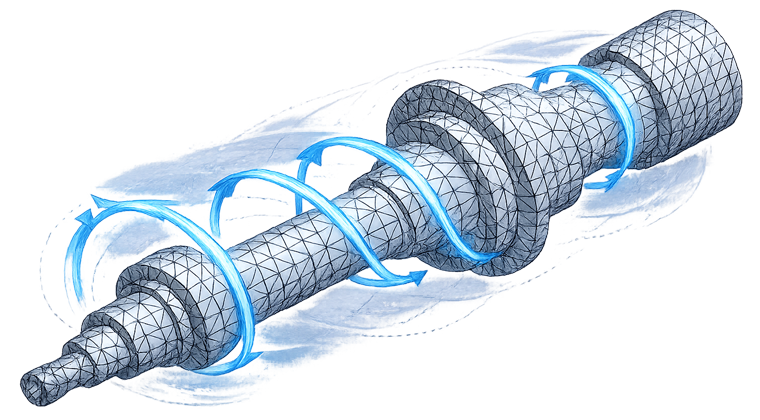
We perform torsional vibration analysis to evaluate twisting motion, torque fluctuations, shaft stresses, drivetrain response, and resonance risks in rotating machinery. Our analyses help protect shafts, couplings, gears, motors, compressors, turbines, and power transmission systems from fatigue damage, excessive vibration, and unexpected failure.
What We Evaluate
Our torsional vibration analyses evaluate how torque variations, rotating inertia, shaft stiffness, couplings, gears, and driven equipment interact to influence dynamic response and machinery reliability.
Torque Fluctuation

Shaft Twist
Torsional Natural Frequencies

Drivetrain Response
Coupling Dynamics
Fatigue Risk
Why
Torsional Vibration Analysis?
Torsional vibration can cause serious damage even when external machine vibration appears acceptable. Excessive twisting motion, torque pulsation, resonance, or drivetrain interaction can lead to shaft fatigue, coupling damage, gear failures, and unplanned downtime. Torsional vibration analysis helps engineers identify these risks, improve drivetrain design, and protect rotating equipment from hidden dynamic failure mechanisms.
Applications
- Torsional Natural Frequency Analysis
- Torque Fluctuation Evaluation
- Shaft Stress & Fatigue Assessment
- Coupling & Gearbox Dynamics
- Startup & Transient Torsional Response
- Failure Investigation
Torsional Natural Frequency Analysis
Identify torsional natural frequencies and mode shapes to determine whether operating speeds or excitation frequencies may create resonance conditions.
Common Applications
- Compressor trains
- Pump systems
- Turbine-generator sets
- Motor-driven equipment
- Gearboxes
- Long shaft systems
Torque Fluctuation Evaluation
Analyze time-varying torque loads caused by motors, engines, compressors, pumps, and process equipment to evaluate their effect on shaft and drivetrain behavior.
Common Applications
- Reciprocating compressors
- Electric motor drives
- Diesel engine systems
- Gear-driven equipment
- Pump trains
- Industrial drivetrains
Shaft Stress & Fatigue Assessment
Evaluate torsional shear stresses and fatigue risk caused by repeated twisting loads to improve long-term reliability and prevent shaft failures.
Common Applications
- Shaft fatigue
- Coupling failures
- Gear tooth loading
- Drive shaft systems
- Keyway stress
- Torque overload events
Coupling & Gearbox Dynamics
Assess how couplings, gearboxes, flexible elements, and connected components influence torsional stiffness, damping, and dynamic response.
Common Applications
- Flexible couplings
- Gearboxes
- Drive trains
- Speed reducers
- Motor couplings
- Power transmission systems
Startup & Transient Torsional Response
Evaluate torsional behavior during startup, shutdown, load changes, short circuits, and other transient events that can create high dynamic torque.
Common Applications
- Startup analysis
- Shutdown analysis
- Load rejection
- Electrical faults
- Sudden torque changes
- Transient operating events
Failure Investigation
Investigate rotating equipment failures by determining whether torsional resonance, torque fluctuation, shaft stress, or drivetrain interaction contributed to damage.
Common Applications
- Shaft fractures
- Coupling failures
- Gearbox damage
- Motor failures
- Compressor train failures
- Root cause analysis