 +1 (844) 444-7456 |

Aerodynamics and Hydrodynamics
We use Computational Fluid Dynamics (CFD) to analyze airflow and fluid behavior around vehicles, aircraft, marine systems, and engineered components to improve performance, efficiency, and reliability.
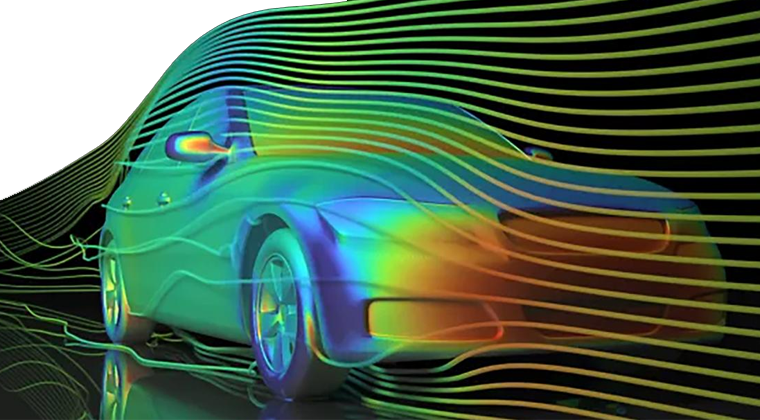
What We Analyze
From vehicles and aircraft to marine systems and industrial equipment, we use CFD simulations to analyze and evaluate aerodynamic and hydrodynamic systems, and support engineering design optimization.

External Aerodynamics

Vehicle Drag Reduction
Aircraft Performance
Marine Hydrodynamics

Wind Engineering

Flow Around Structures
Why
CFD for Aerodynamics?
CFD enables engineers to evaluate airflow and fluid behavior before physical testing, reducing development costs, accelerating design iterations, and improving engineering confidence.
Applications
- Vehicle Aerodynamics
- Aircraft & UAV Performance
- Marine & Offshore Systems
- Wind Engineering
- Turbomachinery Flow
- External Flow Around Structures
Vehicle Aerodynamics
CFD analysis helps evaluate airflow around vehicles to reduce drag, manage lift, improve cooling airflow, and support overall performance and stability.
Common Applications
- Drag reduction
- Lift and downforce evaluation
- Cooling airflow analysis
- Pressure distribution
- Underbody flow studies
- Vehicle performance optimization
Aircraft & UAV Performance
We use CFD simulations to evaluate aerodynamic behavior, pressure loading, lift generation, and flow separation for aircraft, UAVs, and aerospace components.
Common Applications
- Lift and drag prediction
- Wing and airfoil analysis
- UAV performance evaluation
- Flow separation studies
- Pressure coefficient mapping
- Aerodynamic efficiency improvement
Marine & Offshore Systems
Hydrodynamic CFD analysis helps evaluate fluid behavior around marine vessels, offshore structures, and submerged components under complex operating conditions.
Common Applications
- Hull resistance evaluation
- Wave interaction analysis
- Underwater flow studies
- Offshore structure loading
- Propeller flow assessment
- Marine performance optimization
Wind Engineering
CFD simulations help assess wind flow, pressure loading, and aerodynamic effects on buildings, bridges, towers, and infrastructure systems.
Common Applications
- Wind load analysis
- Building airflow studies
- Bridge aerodynamic evaluation
- Pedestrian wind comfort
- Tower and structure loading
- Urban wind flow assessment
Turbomachinery Flow
We analyze complex rotating flow behavior in compressors, turbines, pumps, and fans to support performance evaluation and flow optimization.
Common Applications
- Compressor flow analysis
- Turbine performance evaluation
- Pump flow behavior
- Fan airflow optimization
- Blade pressure distribution
- Rotating flow performance
External Flow Around Structures
CFD helps evaluate airflow and fluid interaction around industrial equipment, structures, and complex geometries to understand loading, separation, and performance impacts.
Common Applications
- Flow around industrial equipment
- Pressure loading evaluation
- Wake and vortex analysis
- Flow separation studies
- Drag and resistance estimation
- Complex geometry simulation